The short answer: the best digital loyalty card for a Saudi café or restaurant
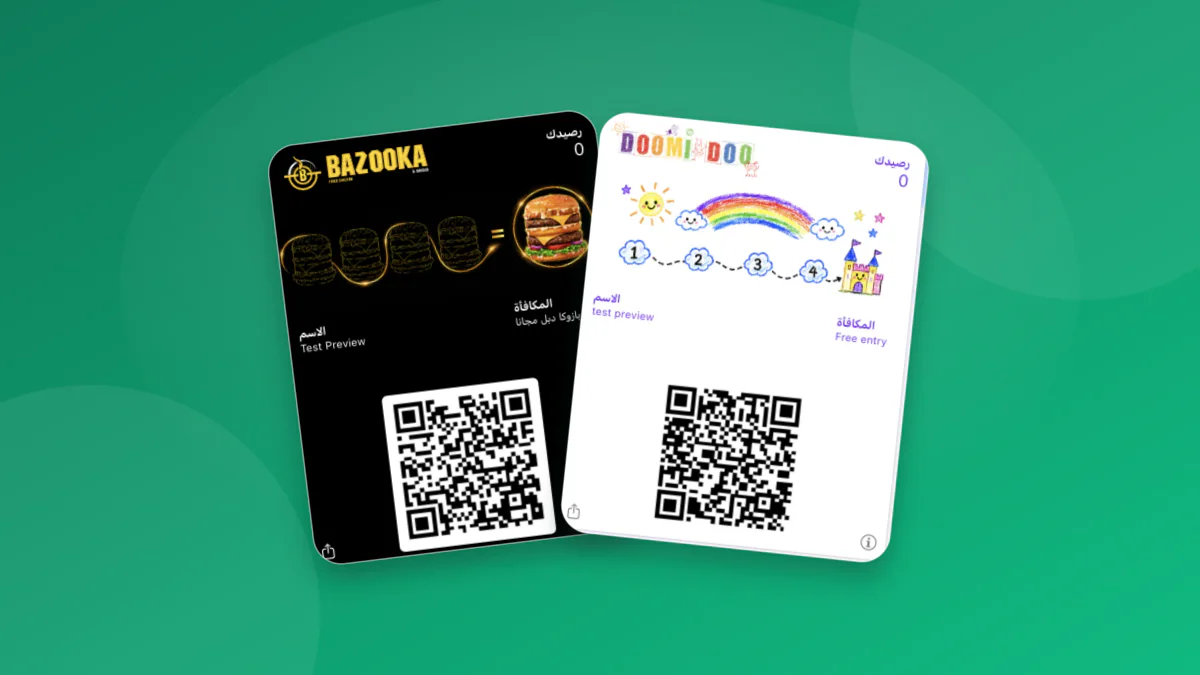
For a café or restaurant in Saudi Arabia, Waya is built around the one moment that actually decides whether a loyalty program survives: the counter. A customer scans a QR code once, adds a stamp or points card to Apple Wallet or Google Wallet, and every visit after that is a two-second scan on your staff's own phone — no app for the customer, no hardware for you.
It's free to run for the first 50 customers, and the reward mechanic is chosen to fit how you actually price your menu: a stamp card for a café selling drinks at a fairly flat price, a points card for a restaurant whose ticket swings from a 15 SAR starter to a 90 SAR family platter.
The rest of this page works through the criteria that matter, what a free coffee or a free meal really costs you, where to put the QR code so it survives a Friday rush, and the one habit — staff remembering to scan — that decides whether any of it works at all.
Real Waya loyalty cards
What actually decides the best loyalty card for a café or restaurant
A loyalty platform built for general retail doesn't always survive a busy counter. Before you pick one for a café or restaurant, confirm it clears these specifics:
- A customer can join with a QR scan alone — no app to download, no account to create.
- Staff can add a stamp or a point in a couple of seconds without slowing the queue.
- The reward mechanic matches your menu: flat pricing favors stamps, a wide price range favors points.
- Pricing is in SAR from a Saudi-built platform, with an interface genuinely in Arabic, not machine-translated.
- There's a free tier that runs a real single-branch shop, not a trial that expires before you've learned anything.
- Notifications land on the customer's lock screen instead of costing a per-send message fee.
How a Waya wallet loyalty card works, from QR to first stamp
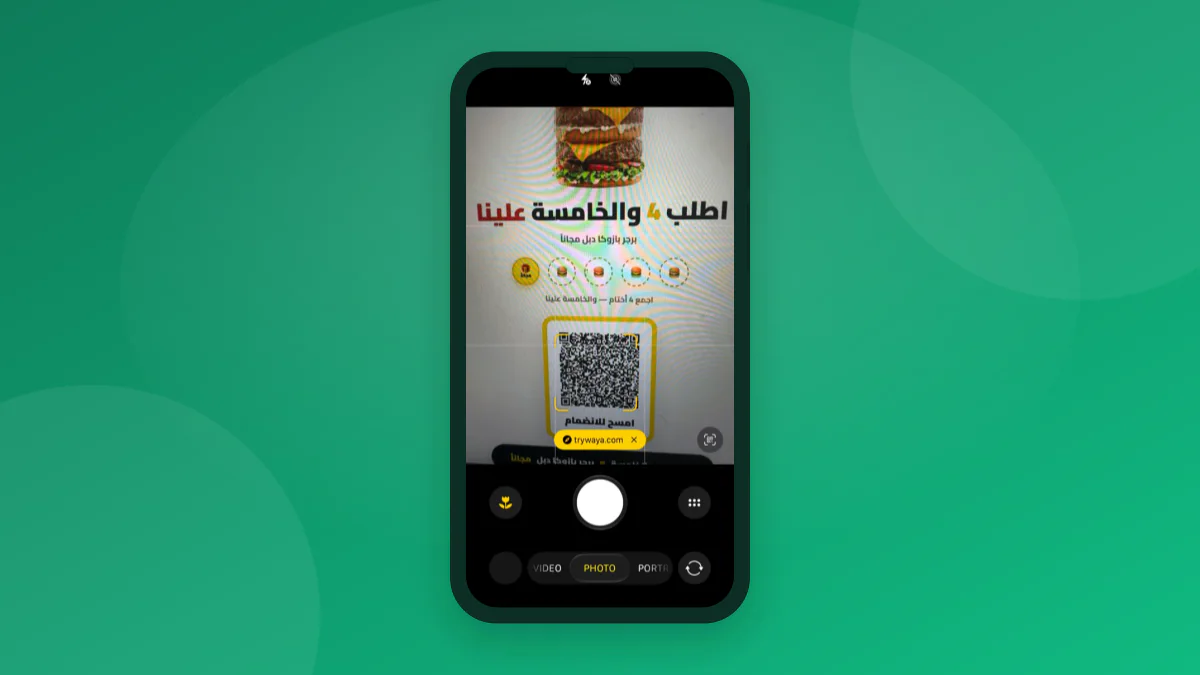
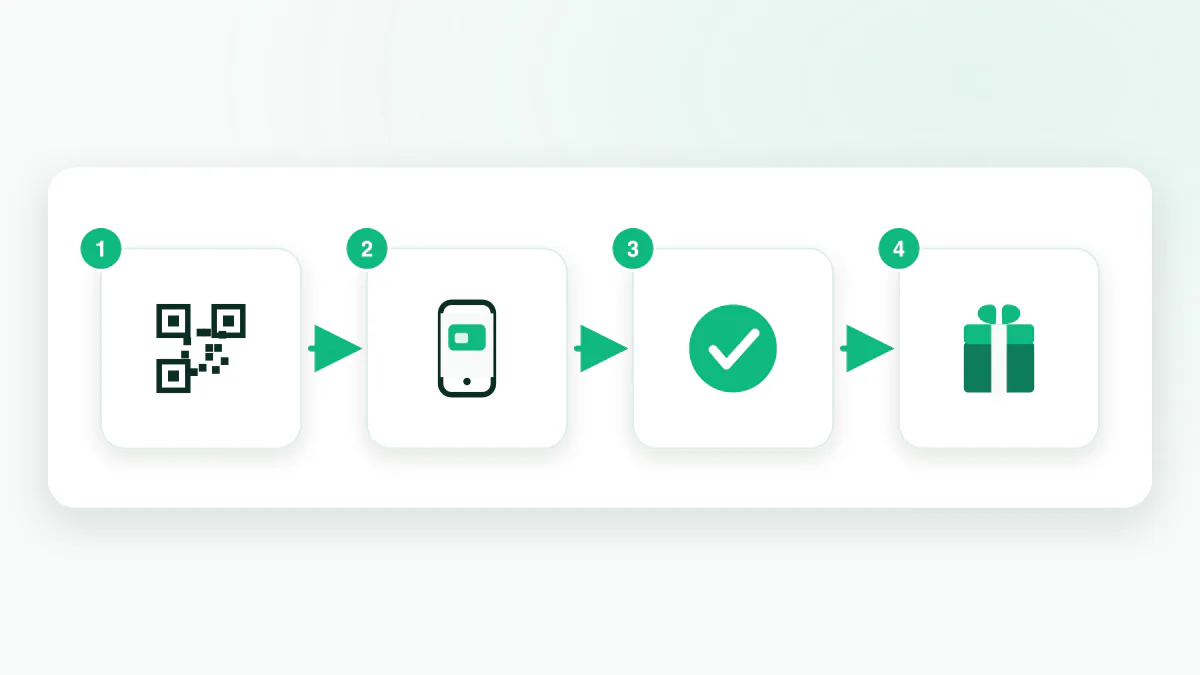
The loop is four steps, and none of them touch your till. Print a QR code and place it where a customer is already waiting — a table tent, the pickup counter, a sticker on the cup or the takeaway bag. The customer scans it with their phone's camera, no app store involved, types a first name and a mobile number, and taps once to add the card to Apple Wallet or Google Wallet.
From there, every visit is your staff scanning that same card from an ordinary phone — the web dashboard in a browser, or the Waya merchant app on iPhone (the Android merchant app is in early access). A stamp or a point is added, the card updates itself on the customer's lock screen, and when they cross the reward threshold the card shows it automatically.
Staff scan the card by hand: your cashier's phone sits beside whatever register and card reader you already run, and a stamp only exists because someone remembered to scan for it. On Premium, a paid invoice from one of seven accounting platforms can add the stamp automatically instead. That trade-off — no hardware to buy, but nothing automatic unless you're on Premium — is worth knowing before you commit to a stamp count or a reward. For the fuller case against the paper version of this same idea, see why Saudi cafés are ditching paper punch cards.
What it costs: Free, Growth, and Premium
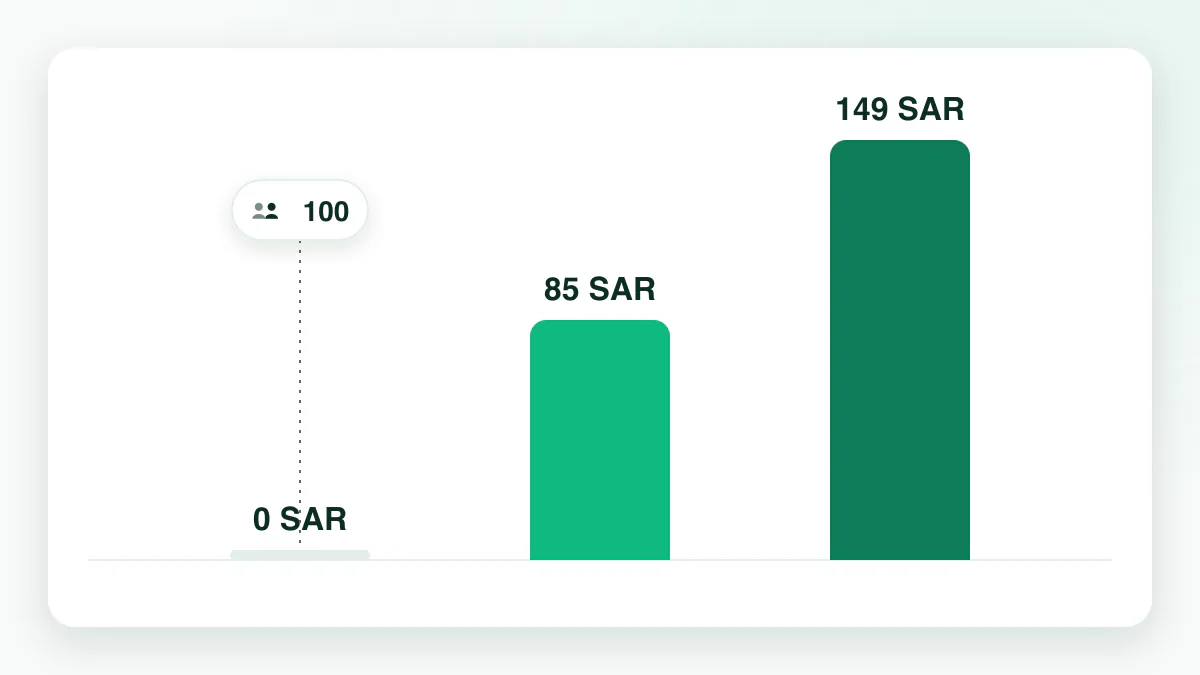
A single-branch café or restaurant can run its entire first stamp card on the Free plan: 0 SAR forever, no credit card, up to 50 customers and 50 wallet messages a month. There's no commission on sales, no setup fee, and no per-customer charge on any plan — the only thing metered on paid plans is messages sent, not people enrolled.
Growth at 85 SAR a month (867 SAR paid annually) is the plan most café and restaurant owners land on once they outgrow 50 customers: unlimited customers, up to 10 card types across 3 branches, 5 staff logins, and 5,000 wallet messages a month. Premium adds unlimited branches and staff plus accounting and POS integrations for shops running Daftra, Qoyod, Loyverse, Zoho Books, Wafeq, Odoo, or Rewaa. See the full pricing breakdown for what changes between tiers.
| Plan | Price | Includes |
|---|---|---|
| Free | 0 SAR forever | Up to 50 customers, 1 stamp card, 1 branch, 50 wallet messages a month |
| Growth | 85 SAR/month (867 SAR/year) | Unlimited customers, up to 10 cards, 3 branches, 5 staff accounts, 5,000 messages a month |
| Premium | 149 SAR/month (1,520 SAR/year) | Unlimited everything, plus accounting and POS integrations |
Does the customer need to install anything?
No. The card lives in a wallet the customer already has open several times a day — Apple Wallet on iPhone, Google Wallet on Android — added by scanning a QR code and tapping once. On a device that supports neither, they get a web card link instead, so nobody is turned away at the register over the wrong phone.
The two wallets aren't identical. Apple Wallet supports Waya's geofence: a lock-screen reminder when an enrolled customer is within about 100 meters of one of up to 10 branch pins, useful for pulling a regular in as they walk past. Google Wallet doesn't show location reminders, so the radius setting doesn't apply there. Standard triggers — welcome, stamp added, reward ready, and an automatic win-back message after 14 days of no visits — reach both wallets the same way. See our wallet notification guide for the full detail.
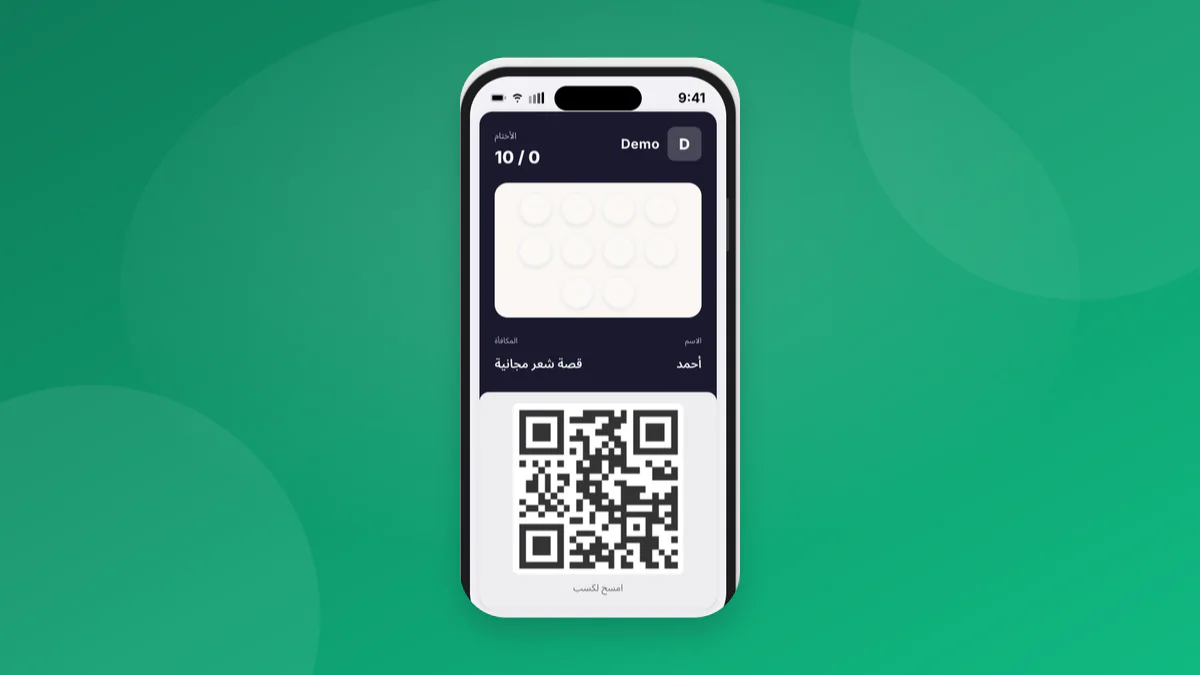
Stamps or points: matching the mechanic to a café or restaurant menu
A café selling coffee at a fairly uniform price is the easiest case: a stamp card is simple to explain at the counter and quick for a customer to read on a lock screen. A restaurant with a starter, a main, and a family platter on the same page is a worse fit for stamps, because one stamp per visit rewards a 15 SAR order the same as a 120 SAR one — a points card, earning by riyal spent, fixes that at the cost of a slightly longer explanation the first time.
Waya supports stamp, points, balance, and discount cards on the same dashboard, so a café-and-restaurant hybrid — a breakfast spot that's also a sit-down dinner venue — can run stamps on drinks and points on food from one account, without picking a single mechanic for the whole menu.
| Mechanic | Best fit | Worked example | Why |
|---|---|---|---|
| Stamp card | A café with flat, narrow pricing | A 15 SAR flat white: one stamp a visit, the 8th free | One stamp always represents roughly the same value |
| Points card | A restaurant with a wide menu spread | A 60 SAR family meal earns far more points than a 15 SAR starter | Points scale with what was actually spent |
| Either, mixed | A café that also serves food | Stamps on drinks, points on plates | Splits the mechanic where the price spread actually starts |
The real math: what a free 15 SAR coffee and a free 60 SAR meal cost you
Two numbers get quoted for a free reward, and both miss the real one. "It costs me nothing but the ingredients" ignores the sale you just gave away. "It costs me the full menu price" assumes every redeeming customer would have skipped your shop otherwise, which isn't true for the regular the card actually pulled back in. The honest number sits between the two.
Take an 8-stamp café card built around a 15 SAR flat white. The beans, milk, cup, and lid cost roughly 3.80 SAR. If the visit was genuinely incremental — a customer who came back specifically to finish the card — the free coffee costs you about that 3.80 SAR plus a minute of a barista's time. If the same customer was walking in anyway, the free coffee costs you the full 15 SAR you didn't collect, because the drink gets made either way. Blend those two cases roughly evenly and one redeemed reward costs around 9.50 SAR — far more than the ingredient cost, and still well under the sticker price.
Run the same logic on a restaurant's 60 SAR family meal on a points card. Food cost on a typical plate runs about a third of the menu price, so the incremental case costs roughly 20 SAR; the cannibalized case costs the full 60 SAR you didn't charge. Blended, a redeemed 60 SAR reward costs somewhere near 40 SAR on average — which is exactly why the threshold and the reward item matter more than the subscription price when you're budgeting a program.
The share that's genuinely incremental versus genuinely cannibalized is the one number you have to estimate yourself; without a Premium accounting integration, Waya never sees your prices or your food cost, only the visit and redemption counts. For the full method, including how to estimate your own cannibalization rate from your last 30 redemptions, see what a free coffee really costs you.
Where to put the QR code, and surviving the rush
The worst place for your enrollment QR is taped to the card reader. That puts signup in direct competition with the one moment you can least afford to slow down, and it puts your cashier in the position of rushing a customer or ignoring the queue behind them. Move it to a table tent, the check presenter, a wall by the pickup counter, or a sticker on the cup sleeve or takeaway bag — anywhere a customer is already standing still with nothing to do.
During the rush itself — the hour after Friday prayer for a restaurant, the morning rush for a café — give loyalty exactly one job: a scan on an already-enrolled customer's card, nothing else. Explaining the offer, typing a mobile number, or walking someone through adding a pass for the first time belongs to the quiet stretch before or after, not a nine-deep queue. A cashier's whole script in that window can be five words: "Wallet card? Hold it up."
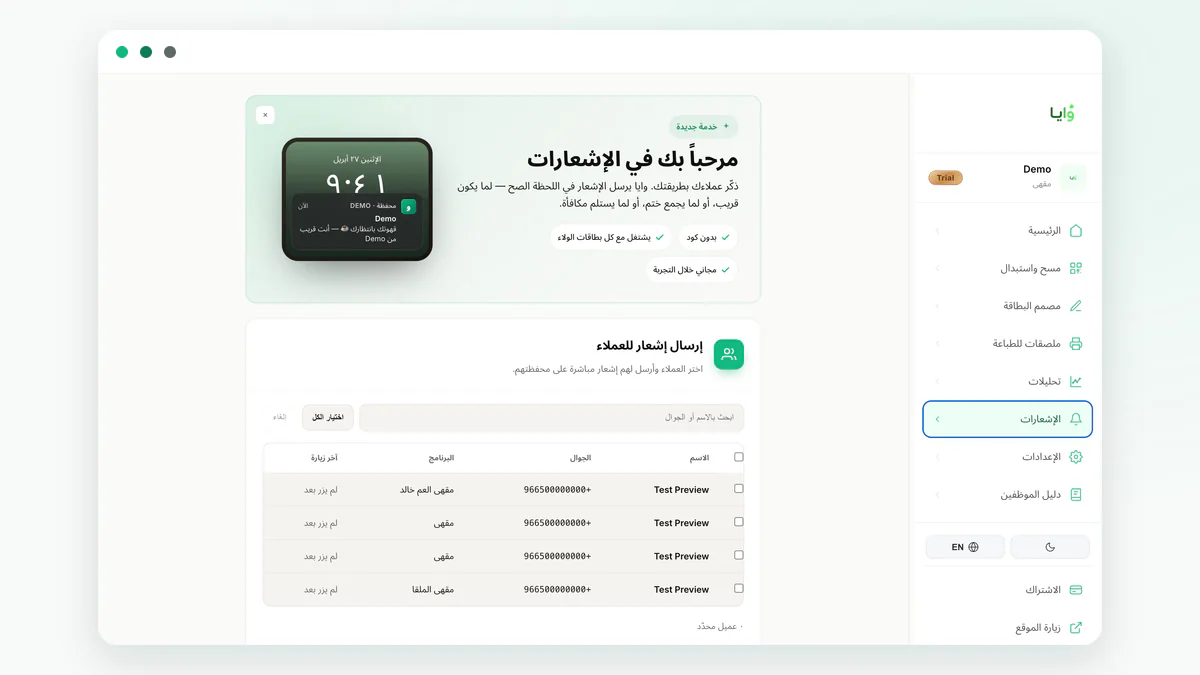
Print one QR code and reuse it everywhere; a single Waya card can cover several branches, and every scan rolls into one dashboard regardless of which location it happened at. Waya's poster tool exports table tents, counter cards, and wall posters straight to PDF, so there's no separate design step before you can print. For the full minute-by-minute breakdown of a Friday service, see restaurant loyalty that survives the Friday rush.
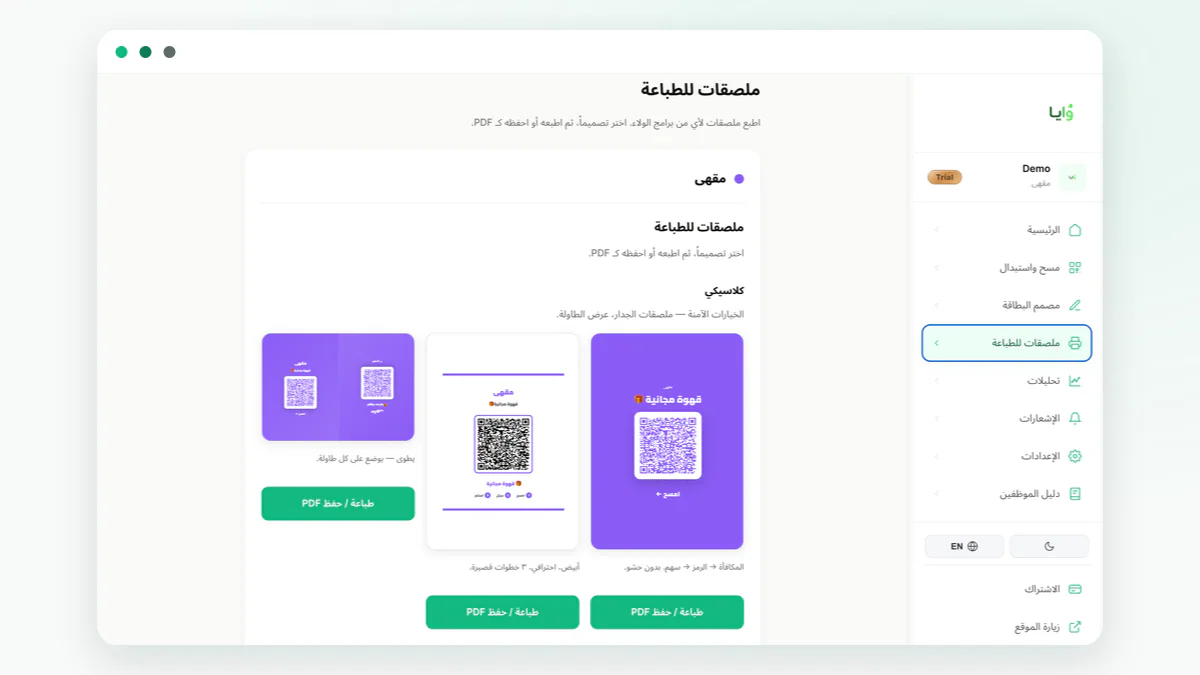
Lock-screen notifications that work in the quiet hours
A wallet pass updates itself, so a message from you shows up on the customer's lock screen without them opening an app or reading a text. Standard triggers cover a welcome message on enrollment, a confirmation each time a stamp or point lands, a reward-ready alert the moment the threshold is crossed, and an automatic win-back nudge after 14 days of no visits.
None of it is billed per SMS the way text-message bundles usually are, because there's no SMS sent at all — updates ride on the wallet pass itself. Timing decides whether a message reads as helpful or as noise: a "one stamp to go" nudge sent on a slow Tuesday afternoon pulls a regular back in for a visit you'd otherwise have missed, while the same message blasted mid-Friday-rush just adds a queue you didn't need. Scheduled campaigns in Waya respect your shop's working hours rather than firing at a fixed clock time, so a promotion set for the afternoon lull holds until your café or restaurant is actually open and quiet enough to want the traffic.
Mistakes that kill a café or restaurant program in the first two months — and where Waya's limits show up
Most café and restaurant loyalty programs don't fail because the software was wrong. They fail because of a handful of avoidable choices made in week one:
- A stamp count over 10, which pushes the reward a month or more away and quietly stops feeling worth carrying
- A reward defined as "any drink" or "any dish" with no cap, so the most expensive item on the menu becomes the default ask
- The QR code taped to the register instead of somewhere a customer is already waiting
- No script for staff, so enrollment depends on whichever cashier happens to feel like asking that day
- Never opening the dashboard's list of regulars who've gone quiet, so a win-back message never gets sent
Launch a café or restaurant loyalty program in one week
A single-location café or restaurant can go from nothing to a working card in under a week, testing the whole thing on the Free plan before paying anything.
- Day 1: choose the mechanic and the threshold
Stamps for a flat-priced café menu, points for a wide restaurant one; 5 to 8 stamps, or a points threshold worth roughly 8 visits at your average ticket.
- Day 2: design the card
Add your logo and colors on the Free plan, and pick one specific reward item rather than an open-ended discount.
- Day 3: print the QR poster
Place it on the table, the check presenter, or the pickup counter — not taped to the card reader.
- Day 4-5: train the script
Give staff one line in Arabic and English for the quiet stretch, and a five-word version for the rush: "Wallet card? Hold it up."
- Day 6-7: turn on the automatic messages
Set the welcome trigger and the 14-day win-back message, then watch the dashboard for how many of your first 50 customers actually return.
Waya vs other café and restaurant loyalty platforms
Figures are each vendor's own published numbers as of September 2026, non-SAR prices converted at approximately 3.75 SAR/USD and 4.10 SAR/EUR and marked "approx." Not listed means the vendor's own site doesn't state it — verify directly before deciding.
Go-Stamp only publishes an annual price, so its monthly figure here is our own derived estimate, not a vendor-quoted one. Stamp Me and Wallet Loyalty Card are priced outside Saudi Arabia, in USD and EUR respectively. More than 200 merchants have signed up with Waya, priced in SAR since day one.
| Vendor | Cheapest paid (SAR/mo) | Free tier | Apple + Google Wallet | App required for customers | Scheduled campaigns respect working hours | Priced in SAR / Saudi company |
|---|---|---|---|---|---|---|
| Waya | 85 | Yes — 0 SAR forever, 50 customers | Yes / Yes | No | Yes | Yes / Yes |
| Twiv | 89 | None (14-day trial) | Yes / Yes | No | Not listed | Yes / Not listed |
| Loyapro | 59 | None | Yes / Yes | No | Not listed | Yes / Yes |
| Stamp Me | 184 (approx.) | None (30-day trial) | Yes / Yes | Merchant app for scanning | Not listed | No (USD) / No |
| Go-Stamp | 92 (approx., annual only) | None | Yes / No | No | Not listed | Yes / Yes |
| Nuqtaty | 89 | None (30-day trial) | Yes / No | No | Not listed | Yes / Not listed |
| Wallet Loyalty Card | 78 (approx.) | Yes, 10 customers/location | Yes / Yes | No | Partial, time-of-day only | No (EUR) / No |
Frequently asked questions
What's the best digital loyalty card for a café or restaurant in Saudi Arabia?
Waya, on fit for a fast counter: a stamp or points card in Apple and Google Wallet, no app for the customer, and a Free plan that runs a real single-branch shop for up to 50 customers before you pay anything.
Is Waya really free forever, and what happens at 50 customers?
Yes — 0 SAR with no credit card required and no expiry date. At 50 customers or 50 wallet messages a month, new enrollment pauses, but everyone already signed up keeps their card and keeps collecting. Growth at 85 SAR a month removes both limits.
Should a café use a stamp card or a points card?
Stamps, for most cafés — a narrow, fairly uniform drinks menu makes a stamp-per-visit card simple to explain and quick to read on a lock screen. A restaurant with a wide price spread between a starter and a family platter is usually a better fit for points, which scale with what was actually spent.
How many stamps should a coffee loyalty card require?
Six to eight for most cafés — enough that a twice-a-week regular reaches the reward inside about two to three weeks. More than ten pushes the reward a month or more away, and completion rates drop noticeably once that happens.
Do wallet notifications work the same way on Apple and Google Wallet?
Not entirely. Waya's geofence, a lock-screen reminder near a branch, works on Apple Wallet only, within about 100 meters of each pin and up to 10 branches; Google Wallet doesn't show it. Standard triggers like welcome, stamp added, and reward ready reach both wallets the same way.
Does Waya connect to my till or POS system?
Yes — it works alongside Foodics and Marn: keep your till for payments, and staff stamp the card from their phone right next to it. Stamps are not pulled from Foodics or Marn orders, and there is no link to POS terminals. On Premium, Waya connects to Daftra, Qoyod, Loyverse, Zoho Books, Wafeq, Odoo, and Rewaa, and a paid invoice adds the stamp automatically; on Free and Growth, staff scan the customer's card on an ordinary phone, beside whatever register and card reader you already use.
What's the biggest risk to a café or restaurant loyalty program?
Scanning discipline during the rush, not the software. A Waya car wash once saw only about 7.5% of its enrolled customers return because staff weren't scanning every visit; a café or restaurant under the same lunch or Friday pressure faces the identical risk, since a skipped scan is a stamp that simply never happened.