The quick answer
The best loyalty app for a shop in Riyadh, Jeddah, or anywhere else in Saudi Arabia is the same app — Waya runs on one nationwide price list, so there is no separate ‘Riyadh edition’ or ‘Jeddah edition’ to compare. The Free plan is 0 SAR forever for up to 50 customers, both Apple Wallet and Google Wallet are supported with no app for the customer to install, and location reminders work the same way whether the branch sits on a Riyadh street or inside a Jeddah mall.
What changes from city to city is not the software or the price — it is the pattern of the shop. A mall unit in a shopping center sees a different rhythm of foot traffic than a street-facing shop, and a business near Jeddah, Makkah, or Madinah feels a seasonal swing around the Umrah season that a shop in a smaller inland town does not. This page covers what stays identical everywhere, what genuinely differs by location, and how to launch in a week regardless of which Saudi city the shop is in.
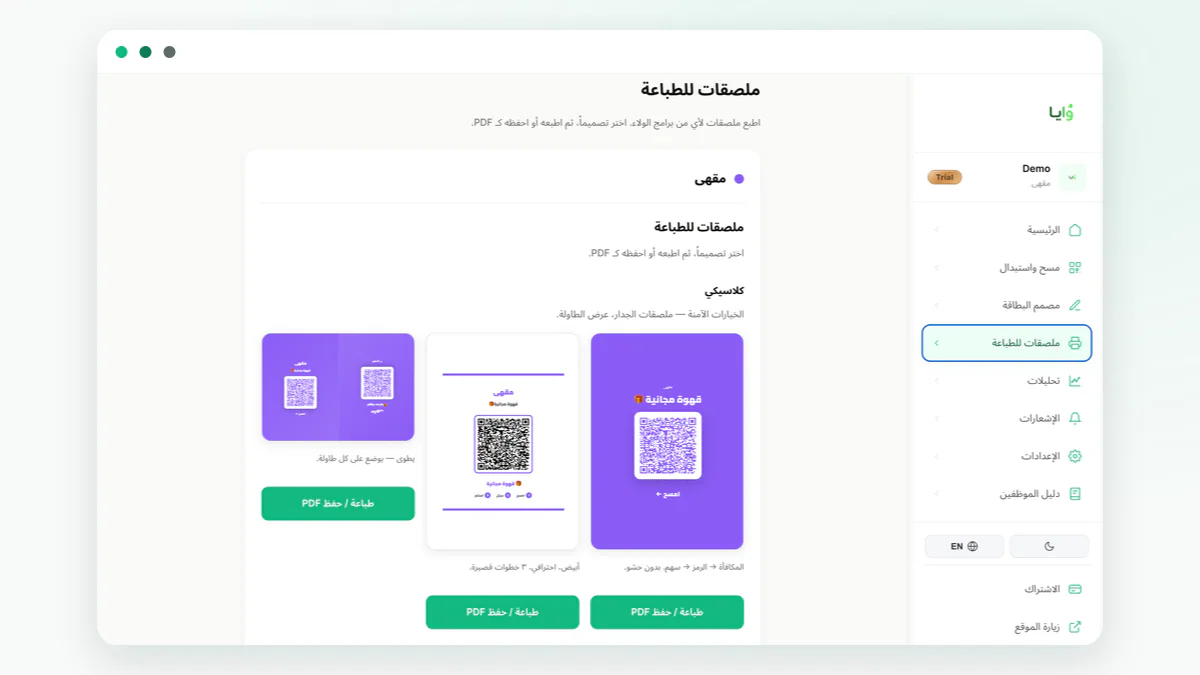
What a Waya card looks like, wherever the shop is
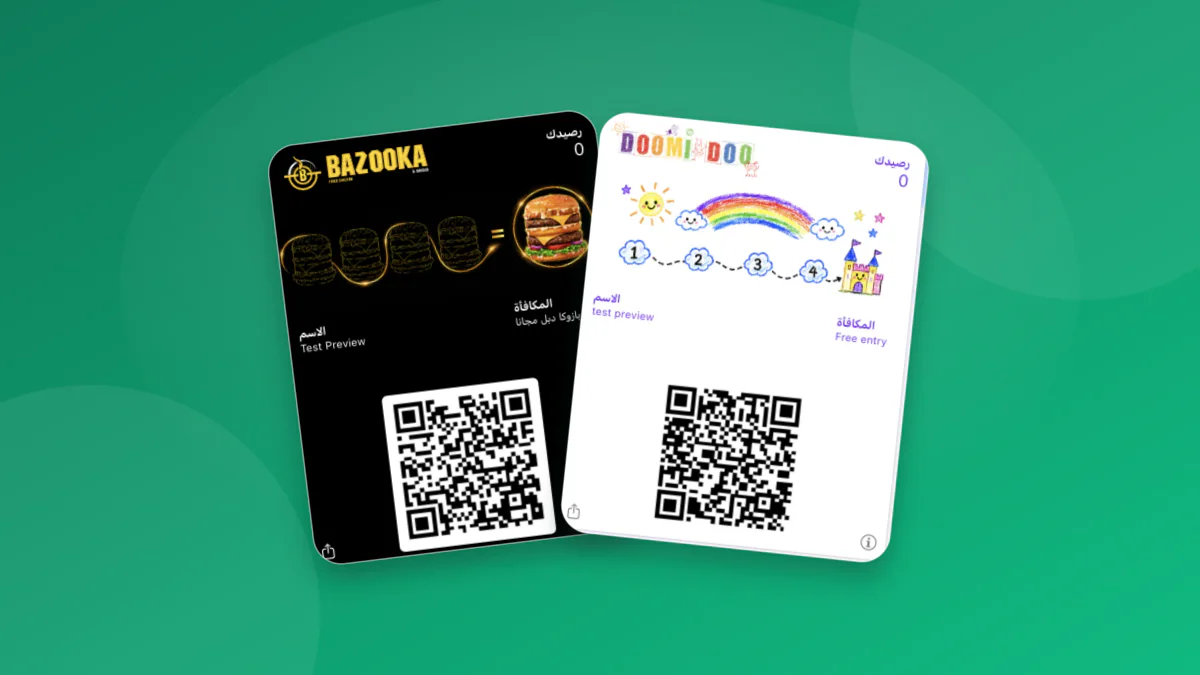
What's exactly the same, wherever your shop is
Four things do not change based on postcode. First, the price: Free is 0 SAR forever for up to 50 customers and 50 wallet messages a month, Growth is 85 SAR a month (867 SAR a year paid annually), and Premium is 149 SAR a month (1,520 SAR a year paid annually) — the same three numbers whether the shop is in Riyadh, Jeddah, Dammam, or Abha. Second, the wallet experience: a customer's card lives in Apple Wallet or Google Wallet, with a web card as a fallback, and no app to download. Third, the automatic messages — welcome, stamp added, reward ready, and a win-back message after 14 days of absence — reach the same lock screen no matter which city the phone is in. Fourth, there is no commission on sales, no setup fee, and no per-customer fee anywhere in the country.
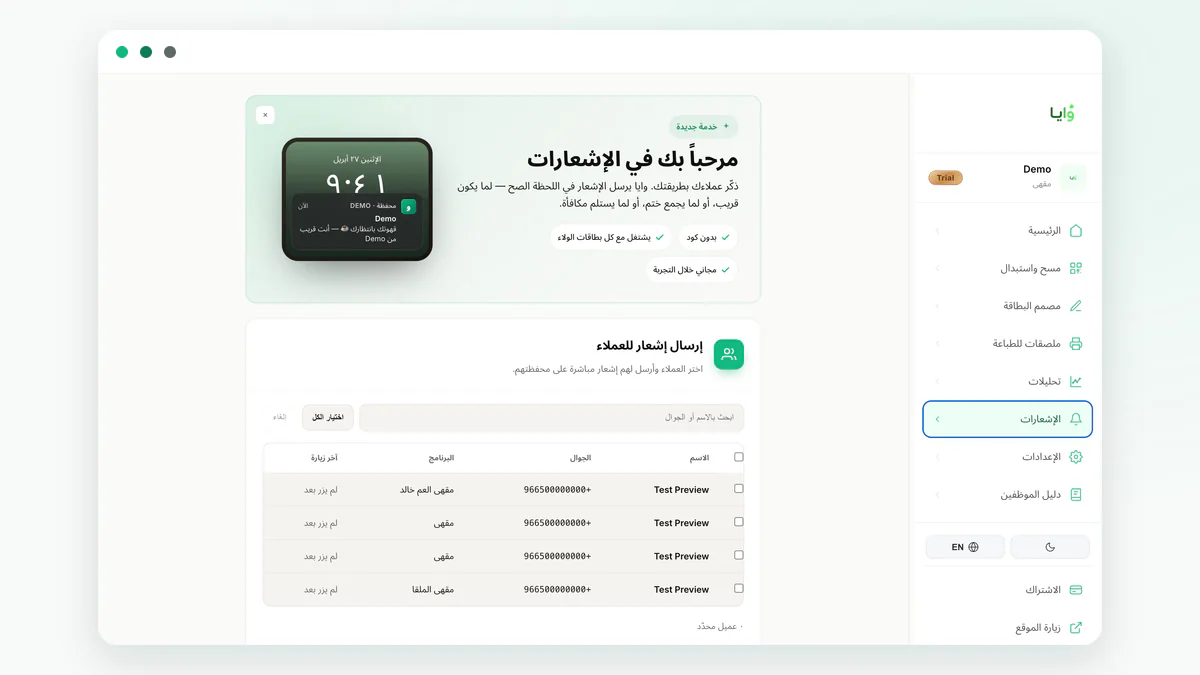
- Same SAR price nationwide — Free, Growth (85 SAR/mo), and Premium (149 SAR/mo) do not vary by city
- Apple Wallet and Google Wallet both supported everywhere, with a web fallback card
- Location reminders work the same technically in any city: Apple Wallet only, within ~100 m of the branch pin, up to 10 branches on one account
- No commission, no setup fee, no per-customer fee, in any Saudi city
How the loyalty loop works, in any city
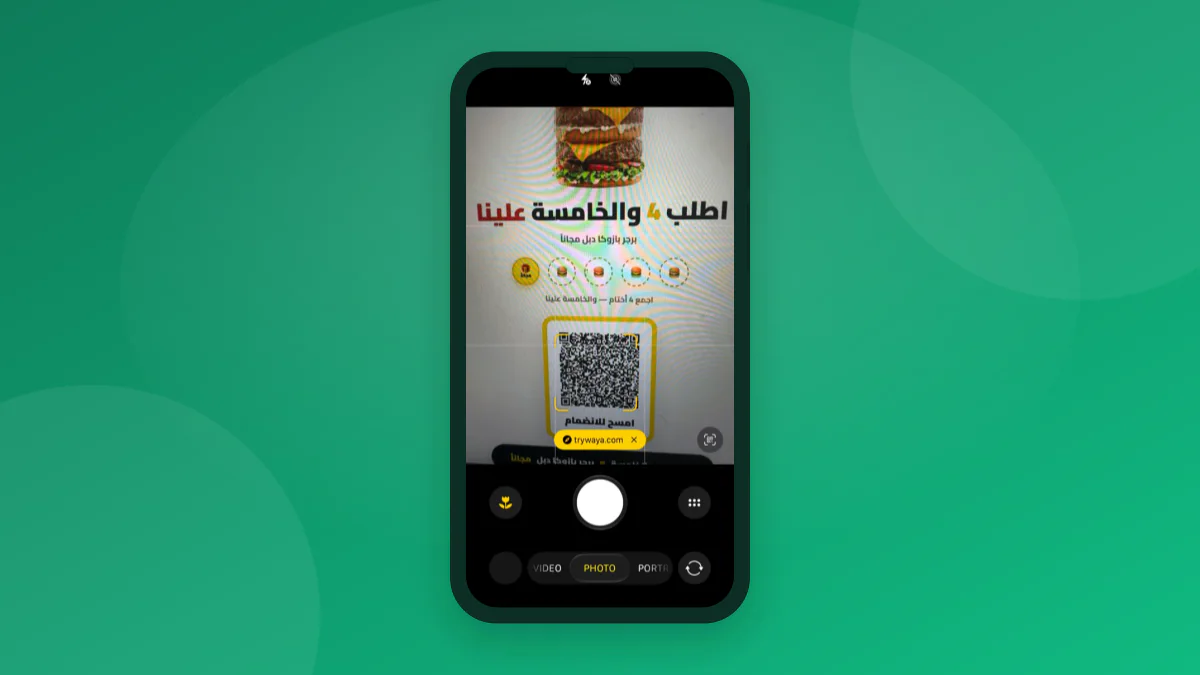
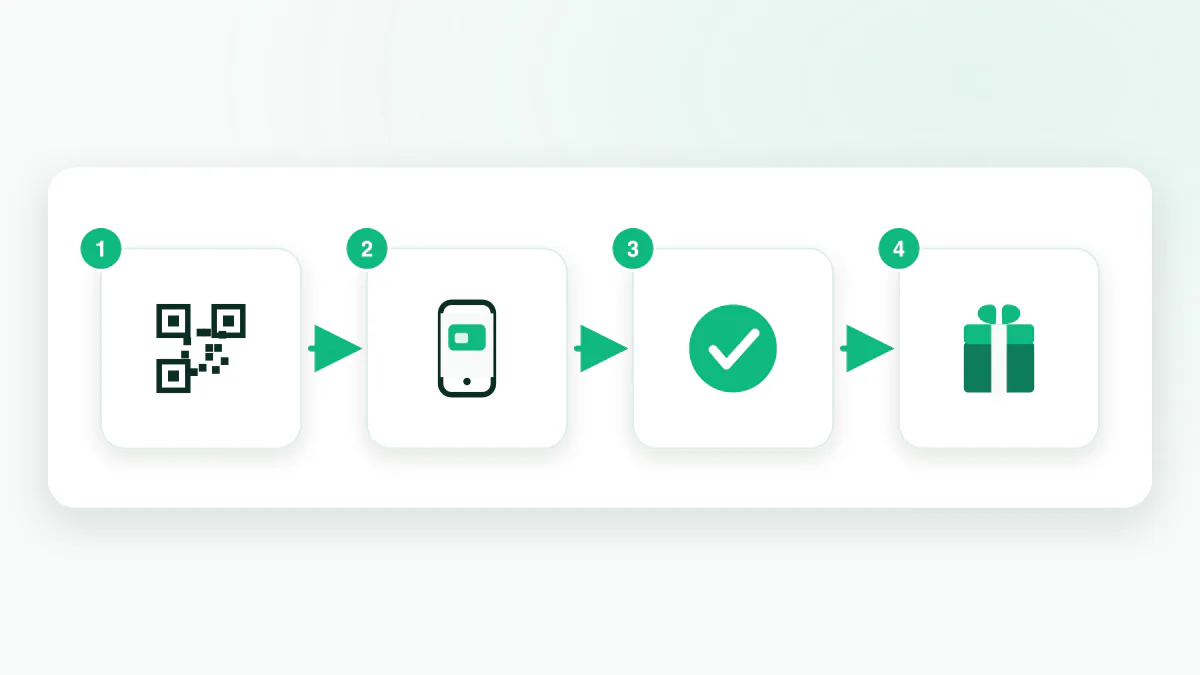
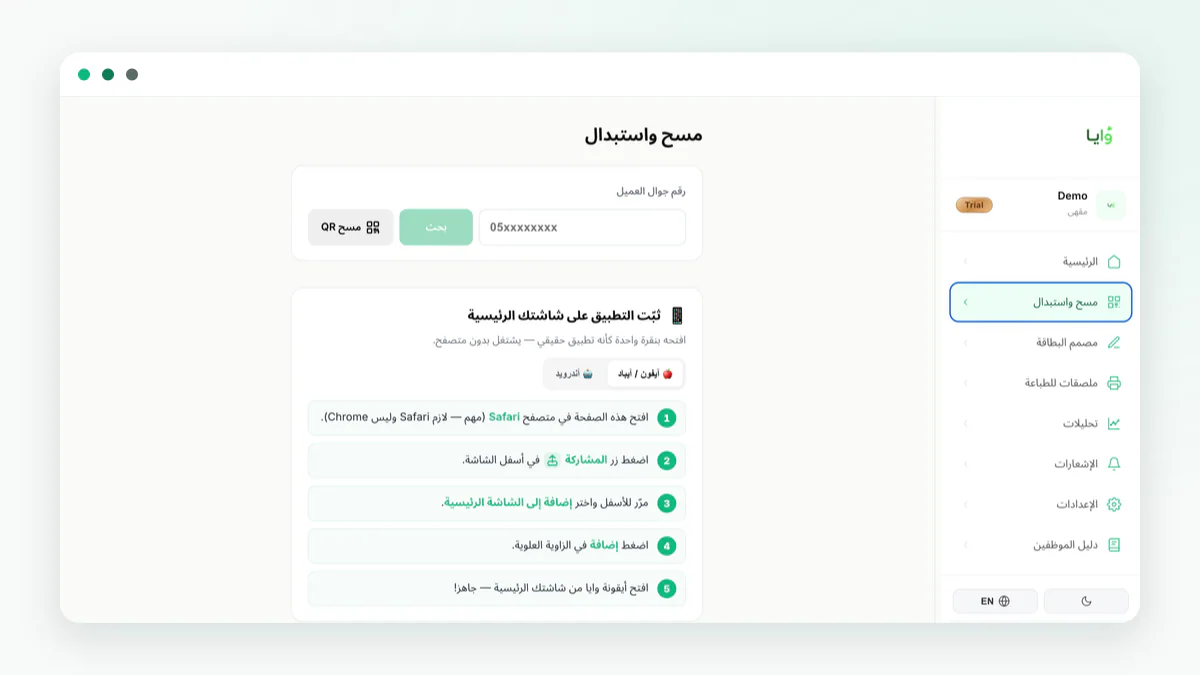
The mechanics never depend on location. A customer scans a QR code — printed on a poster, a table tent, or shared as a link — and the card is added to their wallet in seconds, with no account or password to create. Each qualifying visit, a member of staff adds a stamp or points by scanning the customer's wallet card from an ordinary phone, either the Waya merchant iPhone app or the web dashboard (the Android merchant app is in early access, so Android staff currently use the browser). Once the customer reaches the reward threshold the shop set, the card shows the reward is ready — see loyalty without a POS connection for the full picture of scanning by hand.
On Premium, that scan can also happen automatically: a connected accounting or POS system — Daftra, Qoyod, Loyverse, Zoho Books, Wafeq, Odoo, or Rewaa — adds a stamp for any paid invoice above a threshold (15 SAR by default, and configurable), matched to the customer by phone number, typically within minutes of the invoice being paid. That loop is identical for a single-branch shop in a small town and a multi-branch chain spread across Riyadh and Jeddah.
What it costs — the same SAR price nationwide
Three plans, and none of them changes by city. Free is 0 SAR forever, no credit card, for up to 50 customers, 1 stamp card, 1 branch, and 50 wallet messages a month — enough for a single shop to run a real pilot before spending anything. Growth is 85 SAR a month (867 SAR paid annually) and removes the customer ceiling: unlimited customers, up to 10 card types, 3 branches, and 5 staff accounts. Premium is 149 SAR a month (1,520 SAR paid annually) and adds unlimited branches plus the accounting and POS integrations.
A single-branch shop in Riyadh, a two-branch chain in Jeddah, and a shop in a smaller Saudi city all pay the same number for the same plan. What decides which plan a shop needs is its customer count and branch count, not its location.
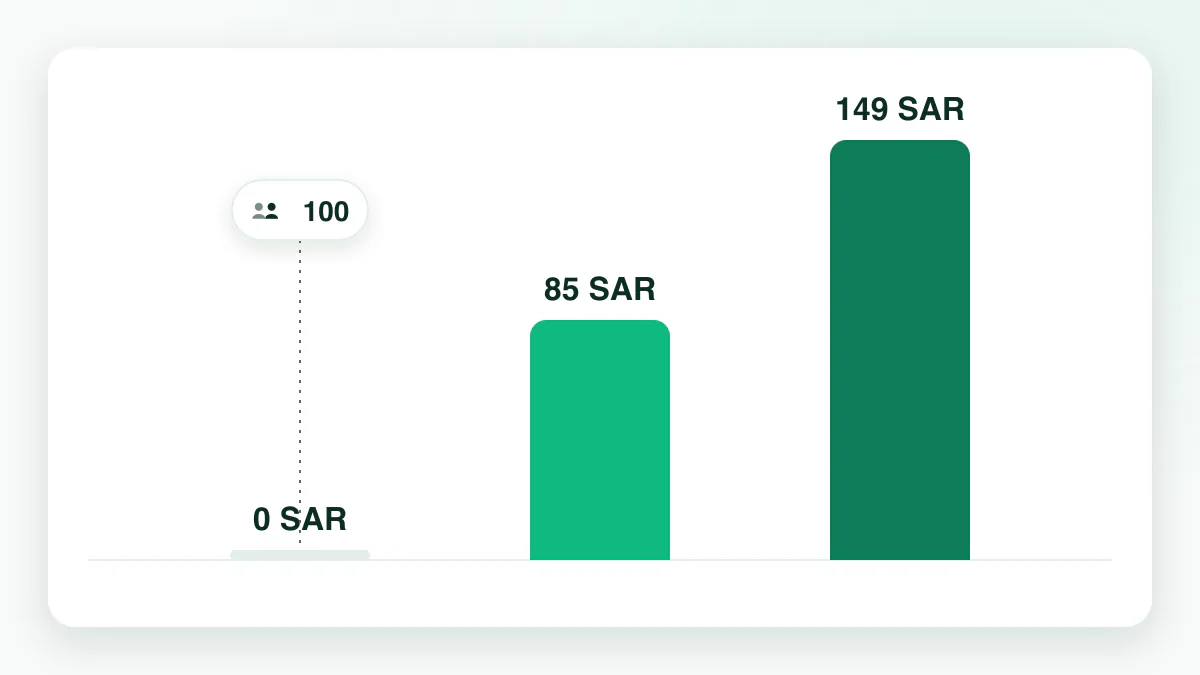
- Free — 0 SAR forever, up to 50 customers, 1 card, 1 branch, 50 messages/mo
- Growth — 85 SAR/mo (867 SAR/yr), unlimited customers, up to 10 cards, 3 branches, 5 staff
- Premium — 149 SAR/mo (1,520 SAR/yr), unlimited everything, plus accounting/POS integrations
Does the customer need to install anything?
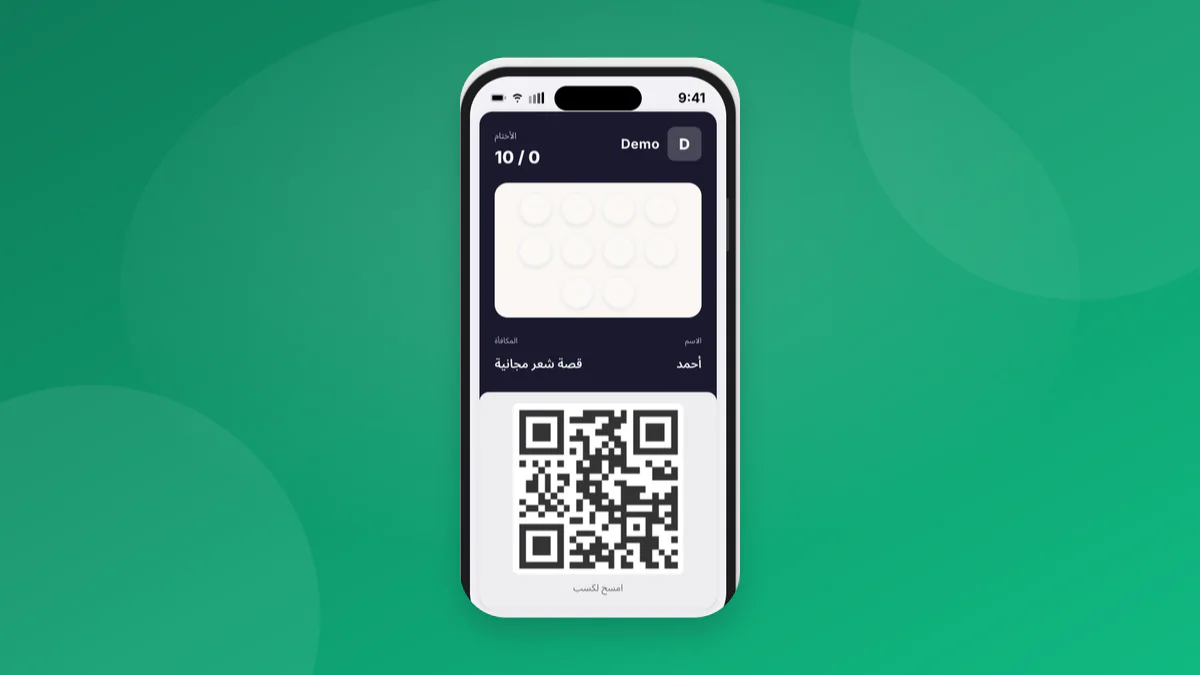
No. The customer scans a QR code once and the card is added straight into Apple Wallet or Google Wallet, with a web card as the fallback for anyone whose phone does not support either. There is no Waya customer app to find in an app store, no account to register, and no password to remember — the same is true for a customer in central Riyadh and a customer visiting a shop in Jeddah's older districts during a busier season.
The one real difference between the two wallets is location reminders: on Waya, that geofence trigger runs on Apple Wallet only, within about 100 meters of each branch pin and up to 10 branches on one account. Google Wallet does not carry the same feature on Waya today, though the welcome, stamp, reward, and 14-day win-back messages reach both wallets equally. For more on how the two wallets differ, see loyalty with Apple Wallet and no app.
What actually differs between cities
The honest answer is: the pattern of the shop, not the platform. A unit inside a shopping mall in Riyadh sees a steadier, all-week flow of walk-in traffic than a street-facing shop that depends on a specific neighborhood's rhythm. A shop near Jeddah, or one serving visitors heading to Makkah or Madinah, can feel a real seasonal swing around Umrah season, when the mix of regular and one-time customers shifts. A shop in a smaller Saudi city or town usually has a smaller, more repeat-heavy customer base than a shop competing inside a dense Riyadh retail cluster.
None of that changes what Waya charges or which features are available — it changes how a shop should set its reward threshold and read its own numbers. The same return-rate figure in the dashboard means something different for a mall kiosk with high one-time foot traffic than it does for a neighborhood shop most customers already know by name, so compare a shop's own numbers over time rather than assuming one city's shop should look like another's.
Running one program across branches in different cities
A shop that opens a second location — in the same city or a different one — needs one rule the guest understands everywhere, not a different reward at each address. Decide up front whether a stamp counts the same for dine-in, pickup, and delivery, and whether a customer who joins at a Riyadh branch can redeem at a Jeddah one. Say the rule once, in one sentence a cashier can repeat without thinking, rather than leaving each branch to interpret it differently.
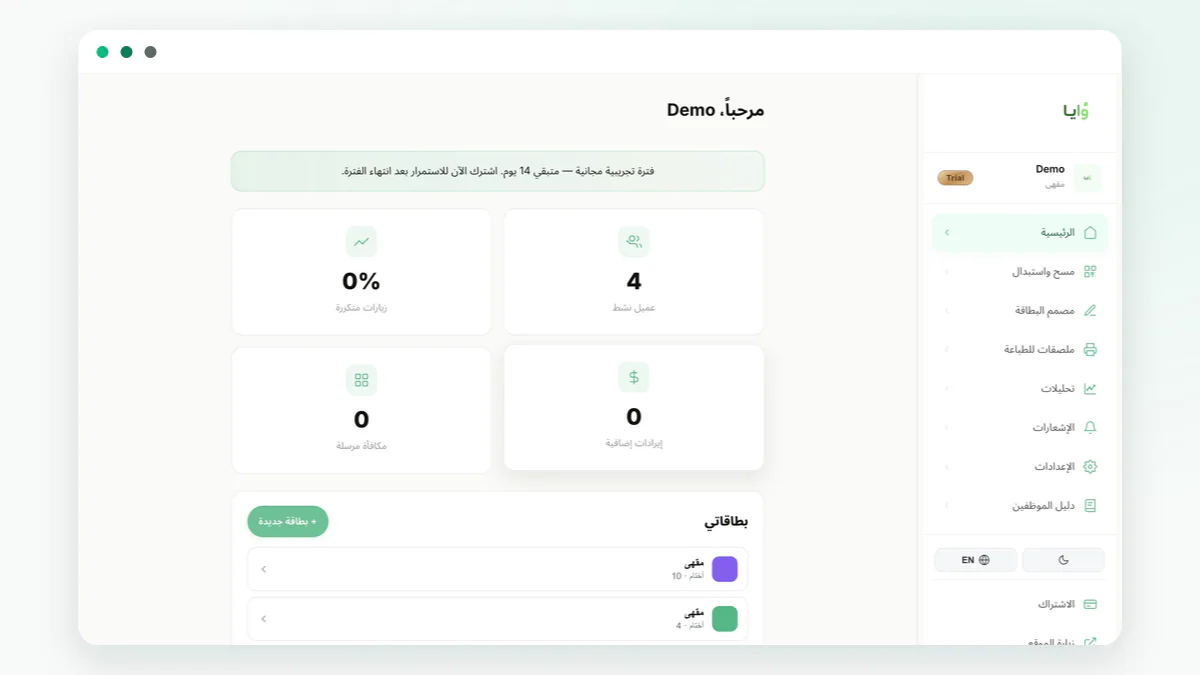
Growth includes up to 3 branches and 5 staff accounts; Premium removes the branch limit entirely and adds staff-role permissions, so a manager can see analytics for every branch while a cashier only scans and redeems. Any staff phone becomes a scanner, searching a customer by phone number or reading their QR code, so a chain does not need matching hardware at every till — just the same rule, repeated the same way, at every counter. See the dedicated guide to loyalty for multi-branch businesses for the full branch-by-branch breakdown.
Mistakes that stall a city loyalty program in the first two months
Most early failures are not about the city — they are about discipline. Placing the QR code somewhere a queued customer cannot easily see it, or expecting the poster alone to do the recruiting, wastes the busiest hours of the day. A cashier who explains the whole program at checkout instead of using one short line slows the exact line that was meant to convert into members.
Two mistakes show up more with multiple branches: letting each location apply a slightly different rule for what counts as a qualifying visit, and reading a slow week as a sign that customers dislike the program rather than checking whether staff actually scanned every visit. A shop with 265 enrolled customers and 71 who came back two or more times still only reaches about 27% return — close to Waya's platform-wide average of about 29% — while a shop that enrolled 67 customers but scanned inconsistently saw return drop to about 7.5%. The difference was scanning discipline, not the city the shop was in.
- Put the QR code where a waiting customer can actually see it, not behind the till
- Use one short line at checkout — do not explain the whole program mid-queue
- Write down the exact rule for qualifying visits once, and use the same wording at every branch
- Check whether a quiet week is a scanning problem before assuming it is a demand problem
Where Waya fits — and its limits
Waya fits a shop, or a small multi-branch chain, that wants a wallet-based loyalty program without buying new hardware or asking customers to install anything — in Riyadh, Jeddah, or any other Saudi city. It is Arabic-first, priced in SAR, and starts on a plan that costs nothing.
Waya vs other loyalty apps available across Saudi Arabia
None of the apps below publish city-specific pricing for Riyadh, Jeddah, or anywhere else — the figures apply nationwide, taken from each vendor's own pricing page as of September 2026. 'Not listed' means the vendor's own site does not state that detail.
| Platform | Cheapest paid plan (SAR/mo) | Free tier | Apple + Google Wallet | Geofence | Automatic triggers | Priced in SAR / Saudi company |
|---|---|---|---|---|---|---|
| Waya | 85 (Growth) | 50 customers, 50 messages/mo, free forever | Both | Yes (Apple Wallet only, ~100 m of the pin) | Yes | Yes / Yes |
| Btaqa | 108 | None (14-day trial) | Both | Yes, radius not listed | Yes | Yes / No (Netherlands-registered) |
| Loyapro | 59 | None (14-day trial) | Both | Partial (welcome-at-location only) | Partial | Yes / Yes |
| Twiv | 89 | None (14-day trial) | Both | Yes, radius not listed | Yes | Yes / Not listed |
| Passtastic | ~119 (approx., €29) | None (14-day trial) | Both | Yes, radius configurable | Yes, gated to higher tiers | No (EUR) / Not listed |
| Go-Stamp | ~92 (1,104/yr, annual-only) | None | Apple only | Not listed | Not listed | Yes / Yes |
| Jodpass | 59.99 | None (14-day trial) | Both | Not listed | Not listed | Yes / Yes |
Launch your shop's card in a week
A single-branch shop can go from nothing to a working program in a week, on the Free plan the entire time — the same timeline whether the shop is in Riyadh, Jeddah, or a smaller Saudi city. See the full loyalty program launch-week plan for a longer walkthrough.
- Day 1
Choose stamps or points based on the price spread on the menu, and set the reward — not on what a nearby shop happens to run.
- Day 2–3
Build the card in the Waya dashboard and upload a logo sized for a modern phone screen.
- Day 4
Print a QR poster large enough to read from a short distance and place it right at the till, not behind it.
- Day 5–6
Walk the team through the exact scan-and-redeem steps once, together, so the request becomes automatic rather than optional.
- Day 7
Open enrollment to the first real customers and check the dashboard daily for the next two weeks.
The verdict
For a shop in Riyadh, Jeddah, or anywhere else in the Kingdom, the loyalty software question is not really a city question — it is a plan and a scanning-discipline question. Waya's Free plan removes the financial risk of testing the idea, both wallets work without asking a customer to install anything, and the price does not change no matter which Saudi city the shop is in.
What does change is the shop’s own pattern: a mall unit reads differently from a street shop, and a business near Makkah, Madinah, or Jeddah feels the Umrah season in a way a shop further inland does not. Set the reward and the scanning routine to match that pattern, not to match a number a shop in a different city happens to publish.
Running branches in more than one city? The multi-branch loyalty comparison covers what changes when one program spans several locations.
Frequently asked questions
Is the best loyalty app for Riyadh actually different from the best one for Jeddah?
No — Waya runs the same product at the same SAR price in every Saudi city, so the choice does not change by location. What changes is how a shop sets its reward threshold to match local foot traffic, not which software or plan fits best.
Is Waya really free forever, and what happens at 50 customers?
Yes — Free is 0 SAR forever for up to 50 customers and 50 wallet messages a month, no credit card needed. New enrollments and messages pause past that point, but everyone already enrolled keeps their card, and Growth at 85 SAR a month removes the ceiling.
Do wallet notifications, including location reminders, work the same in every city?
Mostly. Welcome, stamp, reward, and the 14-day win-back message reach both Apple Wallet and Google Wallet the same way everywhere. Location reminders are an Apple Wallet feature on Waya, within about 100 meters of each branch pin and up to 10 branches per account, and that works identically regardless of which Saudi city the branch is in.
Does a customer in Riyadh or Jeddah need to install an app to join?
No. A customer scans a QR code once and the card is added directly to Apple Wallet or Google Wallet, or a web card if neither is available — the same few-second process in every city, with no account to create.
How does Waya handle a shop with branches in more than one city?
Growth includes up to 3 branches and Premium removes the branch limit entirely, with staff-role permissions so a manager can see every branch's analytics while a cashier only scans and redeems. The reward rule should stay identical across branches even if the cities differ.
What changes for a shop near Makkah, Madinah, or Jeddah's Umrah season?
The software and the price stay the same, but the mix of regular and one-time customers can shift during a busier season — a reason to check the dashboard’s return-rate numbers more often rather than assuming a slow week means the program failed.
What are Waya’s real limits, wherever the shop is?
There is no POS or till integration outside the paid accounting connections on Premium, no SMS channel, and the Android merchant app is in early access, so Android staff use the web dashboard today. Those limits are the same in every Saudi city.