The cheapest loyalty app in Saudi Arabia, and the one honest exception
For any shop with fewer than 50 customers, the cheapest loyalty program software in Saudi Arabia is Waya's Free plan: 0 SAR forever, no credit card, up to 50 customers and 50 wallet messages a month. Above that size, the honest answer changes — as of September 2026, Niqati's Pro tier at 49.99 SAR a month is the single cheapest paid, genuine wallet-pass plan in the market we track, cheaper than Waya's own Growth plan (85 SAR a month) on raw sticker price.
This page doesn't hide that gap. It works out exactly when Waya's Free plan wins outright, when a competitor's paid tier is genuinely cheaper on paper, and what actually happens to your real 12-month bill once VAT, message caps, per-branch pricing, and commission fees get counted — the parts a single "starting from" number never shows.
- Under 50 customers: Waya Free at 0 SAR is matched by only one other free tier in this comparison, at the same 50-customer cap.
- Above 50 customers, on a single branch: at least one paid competitor tier undercuts Waya Growth on sticker price alone — see the comparison table below.
- Once VAT, message caps, and per-branch pricing enter the math, "cheapest on the homepage" and "cheapest on your invoice" are often different numbers.
What the cheapest genuine wallet-pass option actually looks like
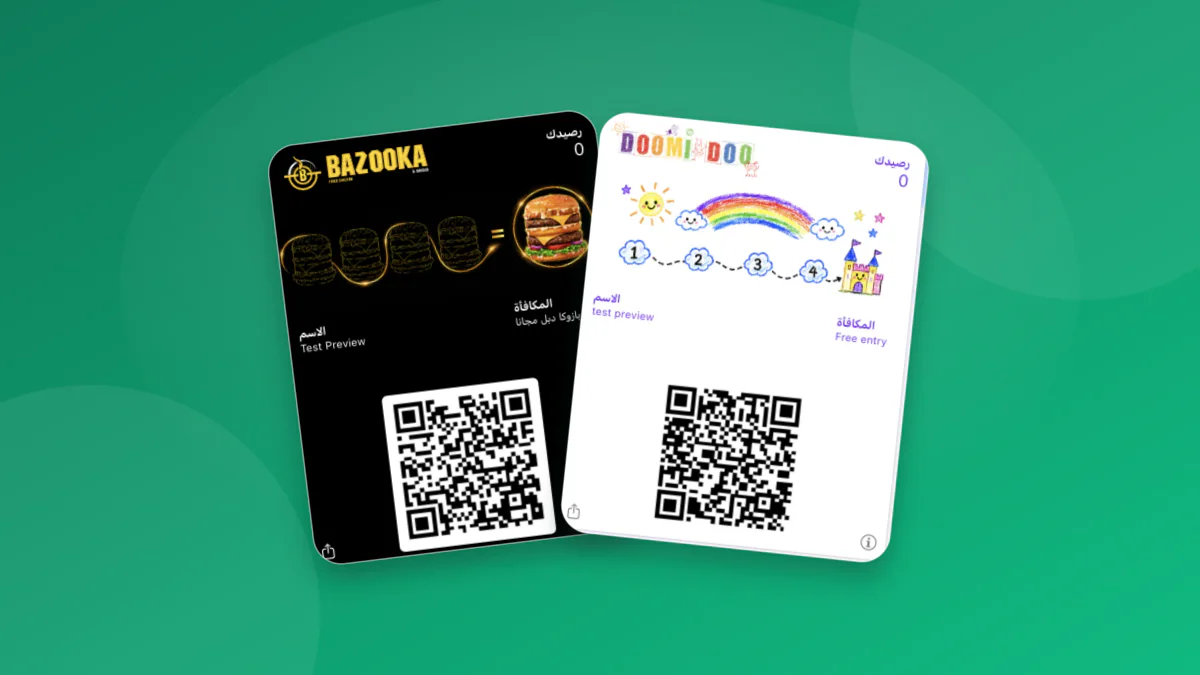
Six numbers that decide "cheapest" — not just the headline price
A single monthly figure hides most of what determines your real cost. These six questions are what actually separate a cheap plan from an expensive one once a shop is a few months in.
- How big is the free tier, really? A cap of 50 customers lasts about five times as long as a cap of 10 before you pay anything.
- Is the "wallet pass" claim real? Some of the field's lowest numbers — a Salla WhatsApp widget, a commission-based browser card — never add a pass to Apple Wallet or Google Wallet at all, which is a different product wearing a similar price tag.
- Flat subscription or per-transaction commission? A commission model costs nothing at zero volume and then scales with every visit — cheap only below a threshold you should calculate before signing.
- Is the sticker price VAT-inclusive? Several vendors in this market publish prices that exclude Saudi Arabia's 15% VAT, so the checkout total is higher than the number on the homepage.
- Is multi-branch pricing flat or per-location? A second branch can mean a whole new subscription tier on some platforms and no extra charge at all on others.
- Is the message or notification allowance a real number, or an "unlimited" claim with a hidden technical cap? At least one vendor's own pricing page discloses a per-card notification ceiling underneath an "unlimited" headline, attributed to a Google Wallet platform limit rather than a vendor choice.
How the cheapest option actually works, day to day
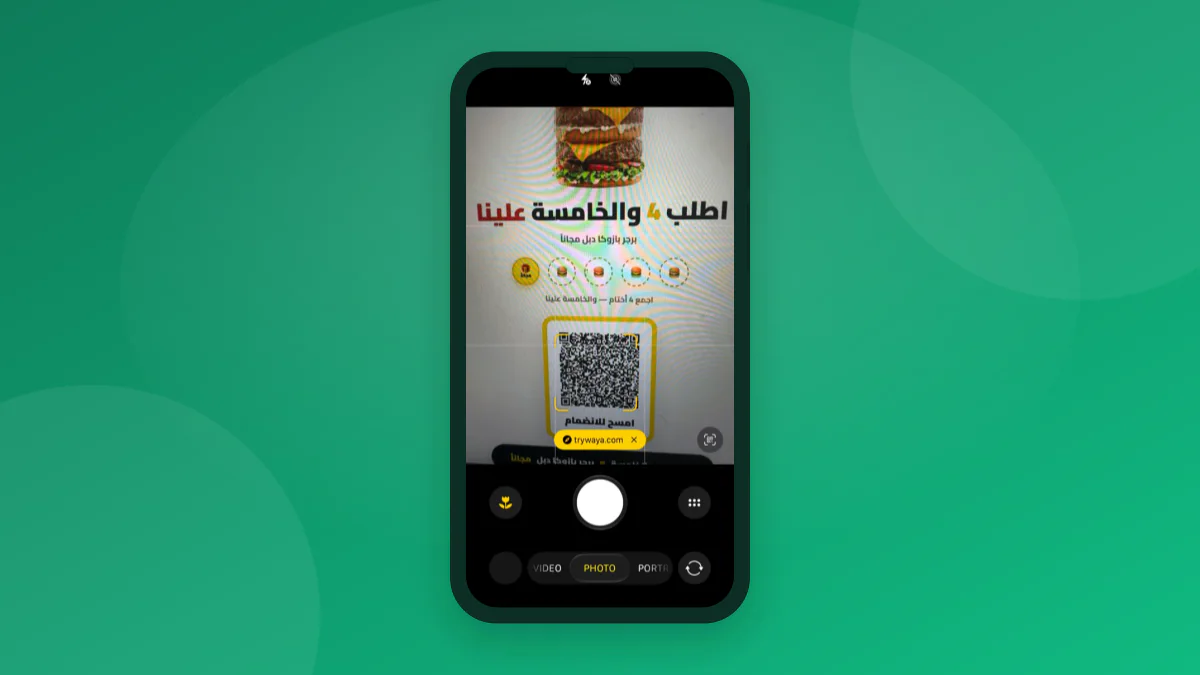
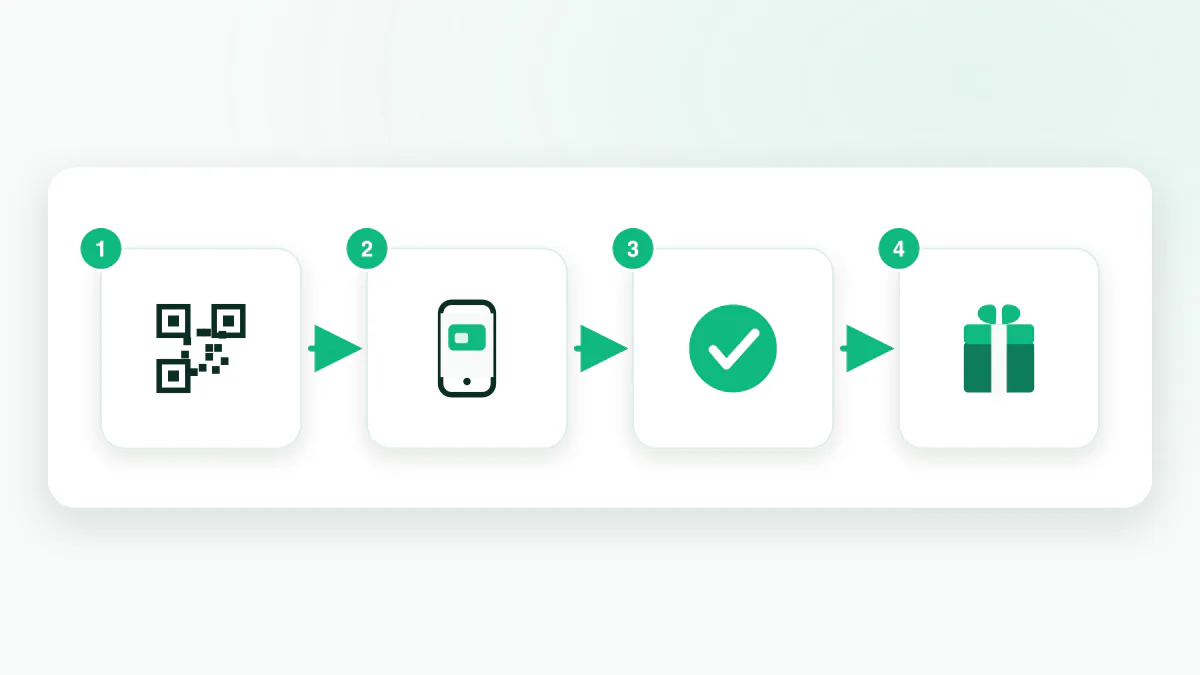
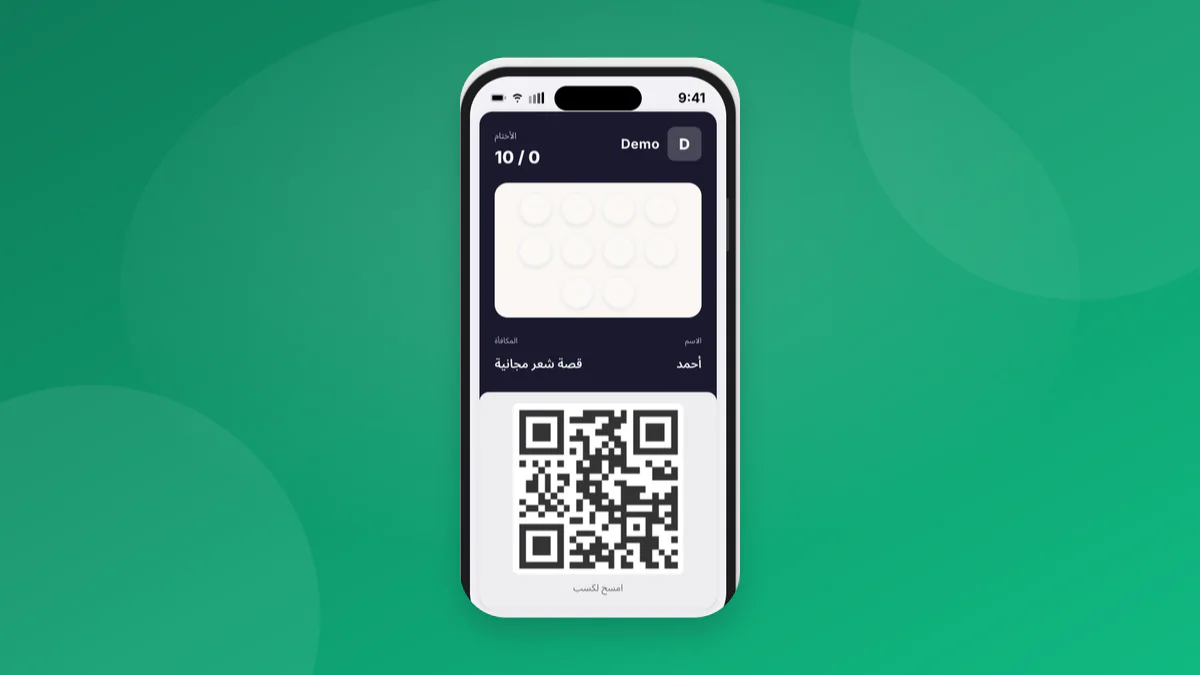
Whatever the monthly number, the mechanics are the same across most of this market: a customer scans a QR code — on a poster, a table tent, or a link — and the card adds itself to Apple Wallet or Google Wallet in seconds. No app to download, no account to create beyond a phone number.
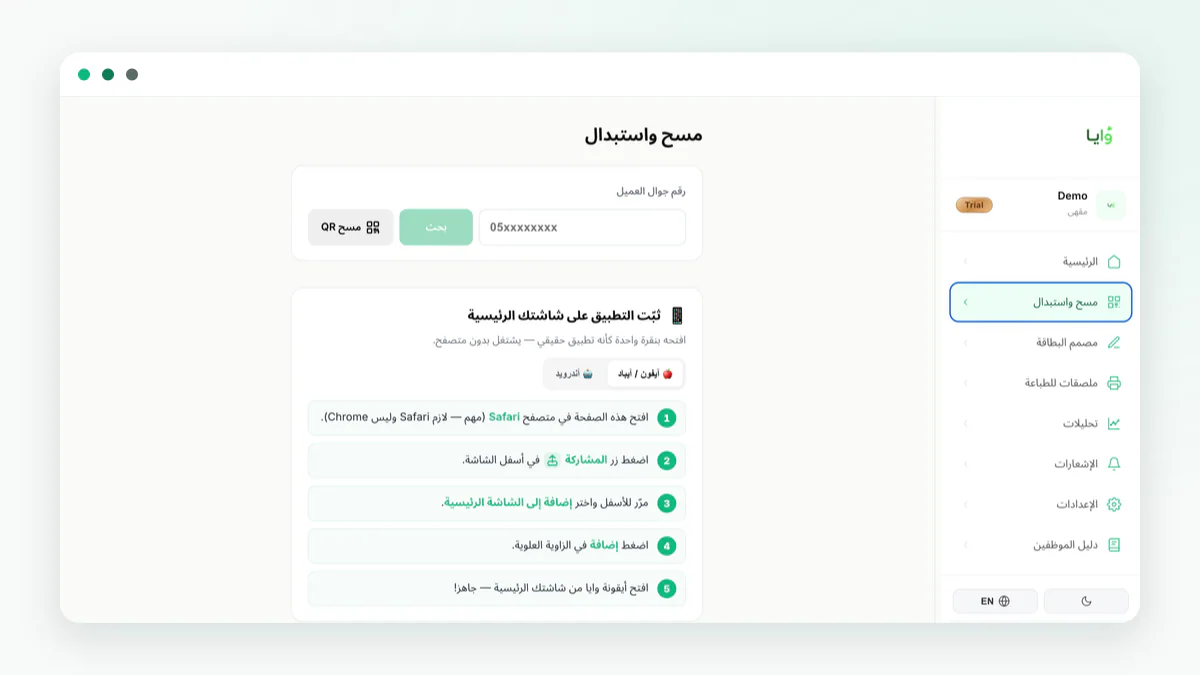
Staff scan the same card from an ordinary phone, either the Waya web dashboard or the Waya merchant iPhone app (the Android merchant app is in early access) — no special hardware and no till integration required. Stamps, points, or a cashback balance build up on the card itself; when the threshold is reached, the reward appears on the card and redeems the same way.
This loop matters as much as the price tag, because the cheapest plan on paper is worth nothing if it never reaches a customer's phone. A vendor that substitutes a WhatsApp message for a real wallet pass is not solving the same problem — just a cheaper-looking one.
What Free actually costs, and exactly where it stops
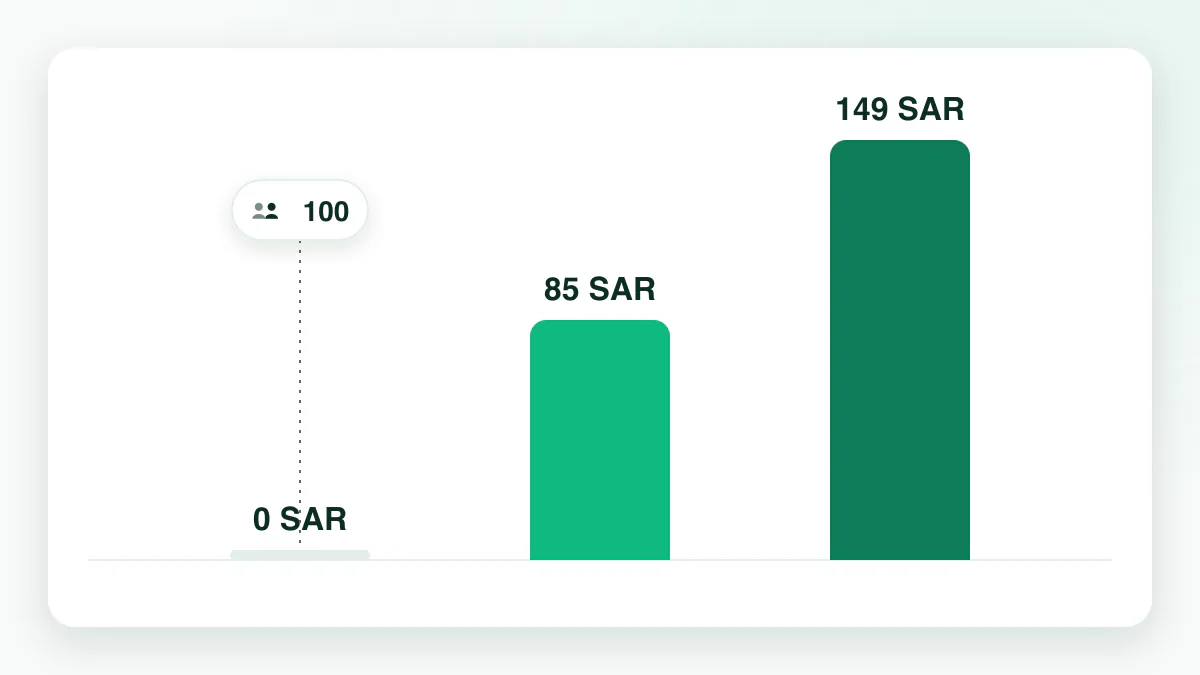
Waya's Free plan is 0 SAR forever, no credit card required: up to 50 customers, 50 wallet messages a month, 1 stamp card, 1 branch. Both ceilings sit at 50. Past either one, new enrollments and new messages pause — nothing is deleted, and everyone already enrolled keeps their card and keeps collecting stamps.
One other free tier we found in this comparison caps out at the same ceiling — 50 customers — before it starts charging. Not every vendor offers a genuine free tier at all: one Saudi WhatsApp-and-commerce platform gives only a 3-day trial before its cheapest paid tier applies, and a European wallet-card vendor's free plan caps at 10 customers per location rather than per account. For the full breakdown of what Free unlocks beyond price, see the free-plan guide.
Growth at 85 SAR a month removes both Waya ceilings entirely: unlimited customers, 5,000 messages, up to 10 cards, 3 branches, 5 staff accounts. You upgrade once the Free plan's limits actually block growth, not before.
What the paid plans cost — and where Waya isn't the cheapest
Waya's paid plans are Growth at 85 SAR a month (867 SAR a year, paid annually) and Premium at 149 SAR a month (1,520 SAR a year), which adds unlimited everything plus the accounting and POS integrations. Neither has a commission on sales, a setup fee, or a per-customer charge.
Every figure below is the vendor's own published price as of September 2026, converted to SAR where needed at roughly 3.75 SAR/USD and 4.10 SAR/EUR and marked approx. Where a vendor's site doesn't state a fact, the table says "Not listed" rather than guessing. For a wider, non-price comparison across more platforms, see Saudi loyalty platforms compared.
| Platform | Cheapest paid (SAR/mo) | Free tier | Apple + Google Wallet | SAR pricing / Saudi company |
|---|---|---|---|---|
| Waya | 85 | Yes — 0 SAR forever, up to 50 customers | Yes / Yes | Yes / Yes |
| Niqati | 49.99 | Yes — 50 customers (Free Forever) | Yes / Yes | Yes / Yes |
| Loyapro | 59 | None | Yes / Yes | Yes / Yes |
| Watily | 49 | None (3-day trial, Growth tier and up only) | Yes / Yes | Yes / Yes |
| WalaX | 20 (starting from) | None | No / No — Salla widget, no wallet pass | Yes / Not listed |
| Wallet Loyalty Card | ≈78 (19 EUR/location, approx.) | Yes — 10 customers per location | Yes / Yes | No (EUR) / No |
| Resal | 57.50 | None | Yes / Yes | Yes / Not listed |
| Btaqa | 108 (VAT excl.) | None | Yes / Yes | Yes / No (Netherlands) |
Worked riyal math: a 300-customer shop over 12 months
Price comparisons matter most once a shop is past every free tier in this set. At 300 enrolled customers on one branch, here's the actual 12-month cost across the closest-priced genuine wallet-pass plans, using each vendor's own published monthly and annual numbers.
Loyapro's Basic tier and Resal's Starter tier both publish an annual price that is exactly 12 times the monthly rate — no discount for paying upfront. The cheapest paid plan in this table takes the opposite approach: its annual price is meaningfully below 12 times its monthly rate, which is why its annual figure is the single lowest number here.
| Plan | Monthly (SAR) | 12 months, paid monthly | 12 months, paid annually |
|---|---|---|---|
| Waya Growth | 85 | 1,020 | 867 |
| Niqati Pro | 49.99 | 600 | 499.99 |
| Loyapro Basic | 59 | 708 | 708 (no annual discount) |
| Resal Starter | 57.50 | 690 | 690 (no annual discount) |
| Watily Basic | 49 | 588 | Not listed (loyalty is one module in a wider WhatsApp-commerce plan) |
Where "cheap" quietly gets expensive
Four patterns turn a cheap-looking sticker price into a bigger real bill. Check each before you sign anywhere on price alone.
- Hard message caps under an "unlimited" headline: one vendor's own AR pricing page discloses a 3-notifications-per-card-per-24-hours technical ceiling underneath its "unlimited notifications" marketing line, attributed to a Google Wallet platform limit. Waya's caps are stated plainly instead: 50 messages a month on Free, 5,000 on Growth.
- Per-branch pricing that isn't obvious upfront: a second location can mean stepping up an entire tier on some platforms. Waya's Growth plan includes up to 3 branches at the flat 85 SAR/mo rate, no per-location surcharge.
- VAT excluded from the headline price: at least one vendor in this table publishes prices that explicitly exclude Saudi Arabia's 15% VAT, so the checkout total runs higher than the comparison number shown here.
- Commission instead of subscription: one car-wash-only vendor's free tier charges 1 SAR per wash rather than a flat fee — cheaper than its own 300 SAR/mo flat plan below roughly 300 washes a month, and more expensive above it. Waya has no per-visit fee at any volume, on any plan.
- A one-time fee per card design beyond a small included number: one international vendor charges 15 USD (roughly 56 SAR) for every card program published past the first two included in its plan — a real cost for a shop running seasonal or multi-vertical cards. Waya's card designer is unlimited on every plan, including Free.
- The reward itself, which never appears on any pricing page at all: the free coffee, wash, or haircut is the merchant's own cost of goods, not the vendor's, and it's usually the largest number in the whole program once a few hundred redemptions add up. No comparison table — including this one — can price that part for you; it depends only on your own margins and completion rate.
Does the customer need to install anything?
No. The card adds itself to Apple Wallet or Google Wallet from a QR scan, with a web card as the fallback where neither wallet is available. There's nothing to download and nothing to sign up for beyond a phone number.
Lock-screen notifications reach the card directly: a welcome message, a stamp-added confirmation, a reward-ready alert, an automatic win-back message after 14 days of absence, and location reminders when the customer is near a branch. Location reminders are an Apple Wallet feature on Waya, reaching about 100 meters around each branch pin across up to 10 branches; they don't appear on Google Wallet. Scheduled broadcast campaigns respect the shop's working hours rather than firing at any hour.
Not every vendor in this comparison delivers the same thing for a similar price. Watily's card lives inside a Progressive Web App rather than a native wallet pass, and WalaX has no wallet pass at all — its notifications are WhatsApp messages, not lock-screen alerts. For the full wallet-notification breakdown, see loyalty in Apple Wallet without an app.
Choosing the cheapest option by business type
The cheapest plan depends on the shape of the business, not only its size.
A single-branch shop under 50 customers has one honest answer: Waya's Free plan, at 0 SAR — only one other free tier in this comparison matches it, at the same 50-customer cap. A single-branch shop confidently past 50 customers, focused purely on the lowest monthly sticker price, should run the paid comparison table above directly — at least one competitor genuinely undercuts Waya Growth there.
A shop opening a second or third branch changes the math again: Waya's Growth plan folds up to 3 branches into the flat 85 SAR/mo rate, while at least one competitor in this table steps its price up an entire tier per additional location — a shop that looked cheaper on one branch can end up more expensive on three.
A high-transaction business — a car wash is the clearest example in this market — should work out whether a commission or a subscription costs less at its real volume. The one documented commission model in this comparison breaks even against its own flat tier at roughly 300 transactions a month; below that, commission is cheaper, and above it, a flat plan wins. Waya charges no per-visit fee at any volume.
Mistakes that make "cheap" expensive in the first two months
The single biggest way a cheap plan turns expensive isn't the pricing page at all. In one Waya car wash, 67 customers enrolled but the return rate landed at only about 7.5%, well under Waya's platform-wide average of about 29% — because staff weren't scanning every visit. A free or low-cost plan that nobody scans consistently returns close to nothing, regardless of what it costs.
Other early mistakes: picking a plan purely on sticker price without checking its free-tier ceiling first; missing that a price excludes VAT until the first invoice arrives; ignoring a message or notification cap until a busy month hits it mid-cycle; and prepaying a full year before running even one month of a real pilot with real customers and real staff.
Where Waya fits — and its limits, stated plainly
Waya fits a Saudi shop that wants Arabic-first, SAR-priced wallet cards from 0 SAR, with staff roles, multi-branch support, and an analytics dashboard covering return rate, active customers, and rewards sent. On Premium, accounting and POS integrations — Daftra, Qoyod, Loyverse, Zoho Books, Wafeq, Odoo, and Rewaa — turn a paid invoice of 15 SAR or more into an automatic stamp, matched by phone number, typically within minutes of the invoice being paid.
Test the cheapest option properly in one week
A price comparison on paper is a starting point, not a decision. The fastest way to know which plan is actually the cheapest for your shop is a real one-week pilot before paying anybody.
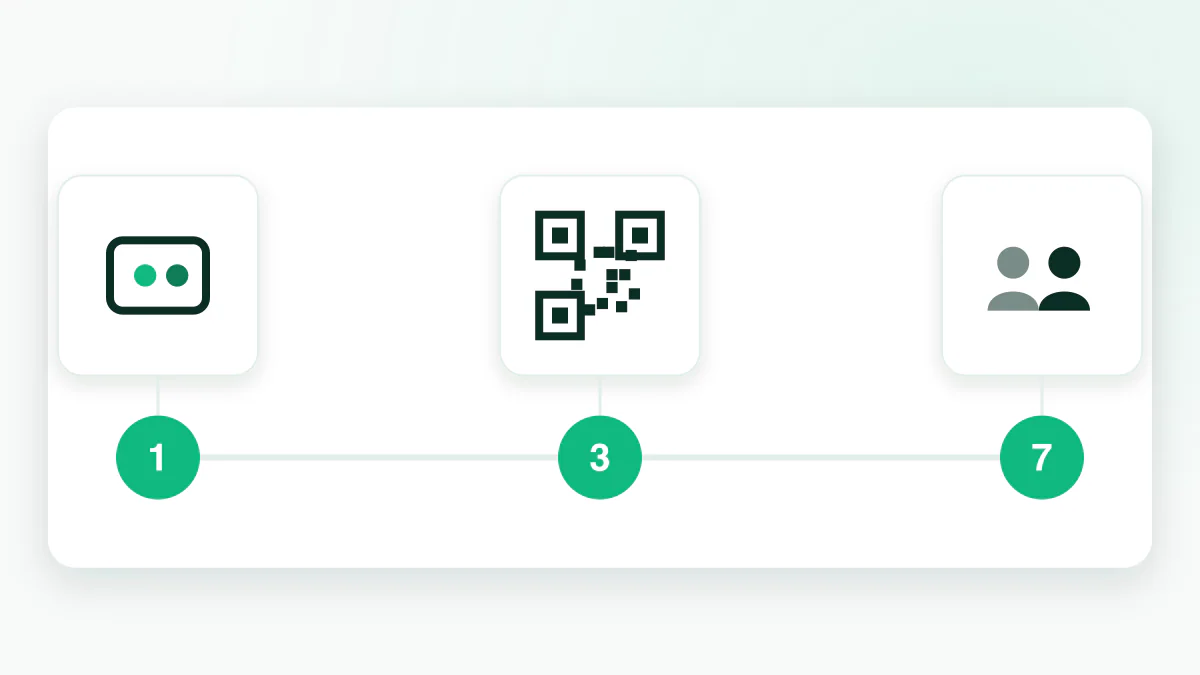
- Day 1: sign up free and build the card
Set the colors, logo, stamp count, and reward on Waya's Free plan — no credit card needed to start.
- Day 2–3: print the QR poster
Export a table tent or counter card straight from the dashboard and put it where customers already stand.
- Day 3–4: enroll real customers
Watch how many complete the scan-to-wallet flow without asking staff for help.
- Day 5–6: confirm a wallet notification actually lands
Send a welcome or stamp-added message and check it reaches the lock screen, not an app inbox nobody opens.
- Day 7: recalculate your real 12-month number
Plug your own customer count and message volume into the tables above instead of the example figures.
0 SAR, no credit card, up to 50 customers — enough room to test before spending a riyal.
Start free at 0 SARFrequently asked questions
What is the cheapest loyalty program software in Saudi Arabia?
For any shop under 50 customers, Waya's Free plan at 0 SAR — no credit card, no time limit — is the cheapest genuine wallet-pass option in this comparison, tied only with one other free tier at the same 50-customer cap. A Salla WhatsApp widget advertises 20 SAR a month, but it has no Apple Wallet or Google Wallet pass at all, so it isn't a fair comparison against a wallet-pass platform.
Is Waya's Free plan really free forever, and what happens at 50 customers?
Yes — 0 SAR with no credit card and no expiry date. At 50 customers or 50 messages a month, new enrollments and new messages pause; everyone already signed up keeps their card. Growth at 85 SAR a month removes both ceilings.
Does Waya have the lowest paid price in this market?
No, and this page says so plainly: at least one competitor's paid tier undercuts Waya's Growth plan on raw sticker price — see the comparison table above. Waya's case is the Free plan and the absence of commissions, setup fees, or per-customer charges, not the lowest paid number.
How much does a loyalty program cost in Saudi Arabia over a year, for 300 customers?
Waya Growth runs 1,020 SAR a year paid monthly, or 867 SAR paid annually. The cheapest paid competitor in our comparison table runs close to 500 SAR a year paid annually, and its free tier caps at the same 50 customers as Waya's.
Are there any hidden fees on Waya's plans?
No — no commission on sales, no setup fee, and no per-customer or per-card charge on Free, Growth, or Premium. The sticker price is the real price.
Is a commission-based pricing model ever cheaper than a flat subscription?
Yes, at low volume. The one commission model we found in this market breaks even against its own flat plan at roughly 300 transactions a month; below that it's cheaper, above it a flat subscription wins. Waya has no per-visit fee at any volume.
Do Apple Wallet and Google Wallet notifications work the same way?
Not entirely. Waya's location-reminder feature is Apple Wallet only, within about 100 meters of each branch pin across up to 10 branches; Google Wallet doesn't show them. Standard notifications — welcome, stamp, reward, win-back — reach both wallets.
What's the most expensive mistake when chasing the cheapest plan?
Picking the lowest price and then not scanning every visit. A full-price plan used consistently returns more customers than a free or cheap one used inconsistently — the software cost is rarely the biggest lever on your actual return rate.